The Champion Who Started Over Three Times
On identity and the art of beginning again
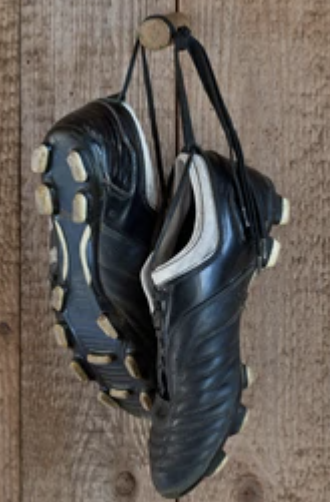
Yesterday I received an email from someone I've been coaching for just over two decades. Short sentences, but full of meaning: "Thank you for all the conversations over the years. They've helped me see who I am now, not who I was."
He's a former athlete. National champion, international titles, a name once synonymous with excellence. But his story isn't about sport - it's about what happens when your identity suddenly disappears.
Three Times Over
When we first met, he was at his peak. His entire life revolved around one thing: winning. But even then, he asked, "What if this stops? Then I'm nobody."
The first reinvention came when his career ended. "I felt like my life was over," he told me. "Sport had been my entire world for over a decade." The period that followed was what he calls "the black hole" - no routine, no structure, no idea who he was without competition.
The second reinvention hit years later when younger athletes emerged who'd never heard of him. "I realized that for them, I didn't exist," he said. "I was no longer the 'former champion' - I was just someone." He had to learn to live not just without competing, but without the recognition too.
The third reinvention is ongoing. Today he has a career unrelated to sports, a family, goals completely disconnected from his athletic past. "I'm happier now than I ever was as a champion," he recently told me. "Back then my happiness depended on winning. Now it depends on myself."
What Two Decades Taught Me
Identity isn't fixed - it's fluid. What feels like your 'core' can later prove to be just a phase. Success can become a prison, especially early success that locks you into an identity that no longer fits.
But here's what strikes me most: our relationship has evolved too. We've moved from formal coaching sessions to something more like trusted allies reflecting together. When you walk alongside someone through multiple life chapters, you both change.
The Question
Whether you're an athlete or not, the question remains: Who are you when you strip away what you do? When your achievements, your title, your role fall away, what remains?
For him, the answer was simple: someone who learned that identity isn't something you have, but something you choose. Every day anew.
Sometimes the most valuable lessons come not from one conversation, but from the space between conversations. From the courage to start over. For the second time. Or the third.
Do you recognize yourself in this story of transitions? Get in touch for an informal conversation. Sometimes it helps not to ask these questions alone.
How hidden time wasters drain your mental energy
Do you recognise this?
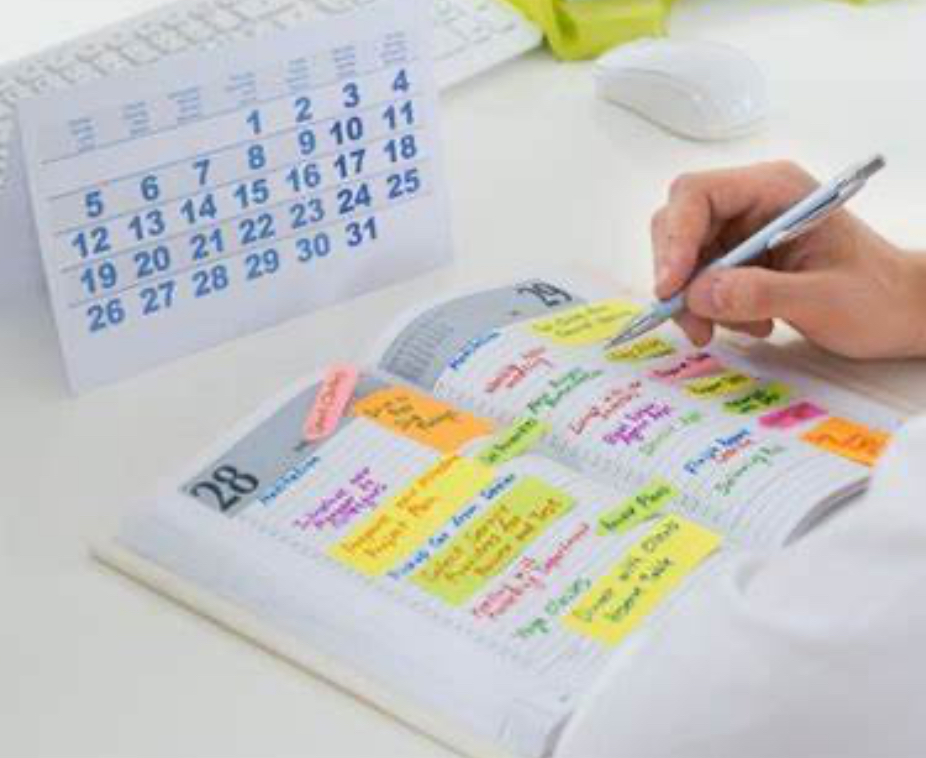
Your schedule looks pretty quiet. No back-to-back meetings, no impossible deadlines. Yet at the end of the day you feel completely exhausted. "But I didn't get that much done, did I?" you think to yourself.
Sarah knew this feeling all too well.
Sarah's story
Sarah, 34 and a project manager, sat across from me with a question I hear more often: "I don't get it. My schedule is pretty quiet. I have plenty of time for my work. But I'm constantly tired."
She showed me her schedule. Indeed, not a crowded schedule. Ample time between appointments. Yet every night she felt as if she had worked twelve hours instead of eight.
The hidden time wasters
Together we took a closer look at her week. Not just the big blocks in her calendar, but especially everything that happened in between:
9:15 a.m. - "Just a quick" help with an Excel sheet will be 30 minutes.
10:30 a.m. - "Got a minute?" becomes 25-minute consultation.
2:20 p.m. - Spontaneous chat about weekend plans: 15 minutes.
3:45 p.m. - "Can you take a look at this mail?" Another 20 minutes.
4:30 p.m. - WhatsApp from a friend: five minutes of typing, but fifteen minutes of focus lost.
Slowly the penny dropped. Sarah didn't say "no" to big projects. She said "yes" to dozens of small requests a day. Added up, they completely consumed her energy.
Why 'just quickly' is so costly
What Sarah did not realize: each "yes" to a small request costs much more than just the time spent.
Each interruption requires your brain to switch gears. Research shows that it takes an average of 23 minutes to regain full concentration. So those "five minutes of just helping out" cost over half an hour of productivity.
In addition, every request requires micro-decisions. At the end of the day, you've made hundreds of small decisions before you've even started your actual work.
And saying "no" feels uncomfortable. So we choose - often unconsciously - to stress and exhaust instead of setting boundaries.
Do you recognize yourself?
The spontaneous helper: At every "can you just..." you jump right in.
The social buffer: Every break is filled with conversation and updates.
The digital ping-pong player: You react to everything immediately because "it only takes a moment."
The automatic yes-kicker: You say "yes" before you've thought about what it's asking.
The helping perfectionist: Every request must be handled perfectly, no matter how small.
Closing the energy leaks
Sarah and I worked on concrete strategies:
1. The five-second rule
Before Sarah said "yes" to a spontaneous request, she learned to count to five. During that time, she asked herself, "What is this really costing me?" Not just time, but focus and energy.
2. The calendar buffer
Sarah began deliberately scheduling fifteen minutes between tasks. Thus, interruptions no longer became interruptions, but part of her schedule.
3. Prepare standard phrases
Sarah prepared answers such as:
- "I'm happy to help you, but is this possible at 3 p.m.?"
- "That sounds interesting, but I'm focusing right now. Can we catch up later?"
- "I'll pick this up tomorrow morning, then I'll have time for it."
The result
After a few weeks, "I feel like I have control over my day again. I don't feel guilty about saying 'no' anymore. And I was surprised at how many people are fine with waiting a while - I just didn't think they would be."
Her energy level had completely flipped. The same agenda, but now with conscious choices.
The biggest surprise? "I still help people just as much. But now at times I choose, which gives me much more energy for it."
Recognizing your energy leaks
Wondering where your energy is going? Start this week with a simple energy audit:
Write down every time you do something that was not in your calendar. Note:
- How you felt before you said 'yes'
- Whether the request was really urgent
- How long it took to find focus again
- How you felt afterwards
After three days, you see the pattern.
Want to track more systematically where your energy is going? In my coaching, I work with the concept of three batteries: physical, mental and emotional. My coachees can evaluate their battery levels daily via an online tool. This provides insight into patterns and helps with more conscious choices about energy expenditure.
Small choices, big impact
Sarah's story shows that your energy level is not only determined by big projects. Often it is the many little 'yeses' that combine to make the difference between an energized or exhausted day.
The solution doesn't have to be drastic. It involves awareness and small adjustments in how you respond to requests.
Because here is the truth: your energy is limited. You can choose where to spend it, or allow it to leak away through a thousand tiny holes.
The choice is yours.
Do you recognize yourself in Sarah's story? Contact us for an informal talk. Together we will see how you can regain control of your time and energy.
Why your body reacts to what happens in your head
And how you can understand these signals

Do you recognise this?
Your head is full of worries about work, but suddenly you also feel physical tension in your shoulders. Or you are stressed about an important presentation and notice your heart beating faster. Perhaps you are struggling with burnout symptoms and feel not only mentally exhausted, but also physically drained.
This is no coincidence. What happens in your head directly affects how your body reacts.
Your body as an alarm system
With nearly 30 years of experience as a mental coach, I see this daily: people who think their physical complaints have nothing to do with their mental state. Headaches that “just” come, sleep problems that are “normal” when busy, or fatigue that “will pass”.
But your body is trying to tell you something.
Stress, anxiety, overwhelm – it all starts in your head, but your body gets the same message. Tension in your thoughts becomes tension in your muscles. Restlessness in your head becomes restlessness in your stomach.
Why does this happen?
Your brain doesn't distinguish between a real threat and the worries in your head. Whether you are running away from a bear or worrying about your workload – your body reacts the same: with tension, increased heart rate, and stress hormones.
The problem: In our modern world, we are constantly “on”. Workload, expectations, worries – it never stops. As a result, your body remains in a state of alertness, which leads to chronic tension.
What I see in my practice
Athletes come to me with “physical” blockages – they can train perfectly, but during competitions their body seems to no longer listen. Their head is full of doubts, and their body follows.
Professionals tell me about headaches, sleep problems, and a constant feeling of fatigue. When we start talking, it turns out their head is full of work-related thoughts that never stop.
People with burnout feel not only mentally drained, but also physically exhausted. Their body has been fighting the battle for so long that there is no energy left.
The reverse path
The beauty is that this connection also works the other way around. Just as stress in your head creates tension in your body, peace in your head can also bring peace to your body.
Breathing – When you consciously breathe more calmly, your whole system becomes calmer
Relaxation – Physical relaxation helps your thoughts to calm down
Movement – Physical activity helps to break down stress hormones
How do you find peace?
1. Learn to recognise your signals
Where do you feel tension in your body? Shoulders? Jaw? Stomach? These are the places where your stress accumulates.
2. Interrupt the pattern
As soon as you feel tension, you can consciously intervene:
- Breathe in and out deeply five times
- Consciously tense your shoulders and then release
- Ask yourself: “What am I thinking about right now?”
3. Give your thoughts space
Not all thoughts are true or helpful. Sometimes it helps to write them down, so you can get them out of your head.
The difference it makes
When you understand how your mind and body work together, you gain choices. You no longer have to watch helplessly as stress takes over.
In my coaching, I don't use complicated tests, but these practical insights. Through reflection and conversation, people learn to recognise and break through their own patterns.
The result? Less tension, better sleep, more energy, and above all: the feeling that you are back in control of how you feel.
Do you recognise yourself in this story? Contact me for a no-obligation consultation. Together we will look at how you can find balance again between what is happening in your head and how your body feels.
.
The tale of the five monkeys
Today a colleague told me a story that really got me thinking about how behavioural patterns influence our development – not just in organisations, but in clubs, associations and voluntary organisations too.
“That’s how we do things here” – but why exactly?
The story goes like this: Five monkeys are placed in a cage with a ladder in the middle. At the top hang fresh bananas. Naturally, the first monkey wants to climb straight up, but as soon as it does, all the monkeys get sprayed
with cold water.
After a few attempts, all the monkeys have learnt: the ladder is taboo.
Then comes the interesting bit…
Monkey 1 is replaced with a new monkey. This one immediately wants to go up the ladder but is pulled down by the other four. It quickly learns: “Here we don’t climb ladders.”
Monkey 2 is replaced. Same story. The new monkey is stopped by the group – including the previous new monkey who has never felt the water spray itself.
This process repeats until all the original monkeys have been replaced.
The result? Five monkeys who all refuse to climb the ladder, whilst none of them has ever experienced the water spray.
Do you recognise this in your organisation, club or voluntary work?
– “We’ve always done it this way”
– “We don’t try that here”
– “That doesn’t work for us”
– “That’s just our culture”
How many of our “rules” still exist because they once made sense, but have since lost their relevance? Or worse still – are they preventing us from growing and improving?
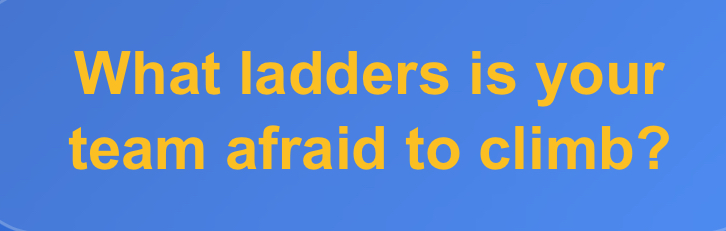
The question is: Which ladders in your organisation, club or team does nobody dare to climb anymore? And more importantly – are those bananas still there?
Time for reflection: Which unwritten rules might deserve a critical look? In which “cages” are we sitting, without realising it ourselves?
.
A month ago
A month ago, I wrote about walking through familiar streets that felt both familiar and foreign. I talked about how everything had changed while I was away – how the past didn’t pause, but kept moving and evolving. But I think I only told half the story.

Because here’s what I didn’t fully grasp then: it wasn’t just that everything else had changed. I had too. So now you’re two strangers meeting again. The you who left doesn’t exist anymore. The home you left doesn’t exist anymore. You’re trying to connect with a place that shaped you, but you’re both fundamentally different now. The reference points that once made you ‘you’ in this place have shifted on both sides.
Your old favorite coffee shop has new owners. Your childhood friends have moved. The neighborhood has new energy. And you? You have new ways of seeing, new rhythms, new instincts developed in places this home has never known.
It’s like trying to have a conversation in a language you both used to speak fluently, but you’ve each developed different dialects in isolation. The words are familiar, but the meaning gets lost somewhere in translation.. .
.
Breathing Space
When the world spins fast and loud, and worry wraps you like a cloud,
remember this: you have the power to find your calm in any hour.
Breathe in deep, let shoulders fall,
you don’t need to carry it all.
Each gentle breath, a small reprieve.
Sometimes the best thing is to leave the rushing thoughts, the endless list, and grant yourself this: to exist in quiet moments, soft and still, where peace returns, and always will.
Outside your comfort zone
Why stepping outside your comfort zone always pays off.
This article resonates with me. My youngest daughter studied abroad for years, always in English. When she started at the university of technology last year, English was still her primary language, and she planned to continue this international path.
But she soon made a conscious choice: to fully immerse herself in Dutch student life. She hasn't regretted it for a second. It has brought her so much more than she expected – not just language skills, but genuine connection and a sense of belonging.
Now she actively encourages her bilingual friends to take that step as well. She sees how open the Dutch student community is to international students who make the effort to truly participate. She experiences this daily at Theta.
This article perfectly demonstrates: integration is not easy, but absolutely worth it. Sometimes you just have to dare to jump – and trust that there is a safety net.
Do you recognise this? Share your experience!
.
A coffee conversation
Two weeks ago, I posted about men's mental health and a coffee conversation with someone I mentor.

Yesterday, I received the following message:
“He wrote about the moment I finally dared to say I was struggling. About how I thought men had to suppress their emotions.
I'm not sending you this message to complain about the post. Not because it was uncomfortable. But to say: thank you.
Because that post did something to me. Seeing my story, told so respectfully, gave me the courage I needed.
I have reached out to people around me. Had real conversations. Taken steps I had been putting off for months.
That one coffee conversation was the beginning. That post was the push I needed.”
For every man reading this who thinks: “That's me”: you are not alone. Start with one conversation. With one person. It doesn't have to be perfect.
Vulnerability is indeed strength. And sometimes sharing your story has more impact than you think.
Awareness month is almost over. But this goes beyond June. This is about every day we make space for real conversations.
.
After years away
After years away, you find yourself walking through familiar streets again. Those wanderings abroad, that constant searching for… something. Walking among the crowd, surrounded by noise and movement, yet feeling profoundly alone.
Who do we connect with?
Everything has changed. The past didn’t pause while we were away – it kept moving, evolving, leaving us to navigate a world that feels both familiar and foreign.
But here’s the truth many men struggle to voice: feeling lost doesn’t make you weak.
This Men’s Mental Health Month, let’s acknowledge that:
– It’s okay to feel disconnected after major life changes
– Searching for purpose and belonging is part of the human experience
– Asking “who can I connect with?” is the first step toward healing.
The key? Step out of self-pity and step into action.
Reach out. Have that conversation. Join that group. Seek that help.
Your mental health matters. Your story matters. You matter.
Live like a turtle
Sociologist Corey Keyes recently advised, "Live like a turtle." At first, I thought, "Easy to say, but we all have deadlines!"
Until I realised: this isn't about being slow, but about being aware.
A turtle doesn't rush, but it does arrive. It is completely present in the moment. No multitasking, no distraction – pure focus on the here and now.
Recent research shows that combining this mindful attitude with conscious use of your strengths (Character Strengths) leads to greater well-being and better performance.
The fascinating thing is:
People who find their 'turtle momentum' not only report more peace and energy, but surprisingly also... better results.
What would happen if we all became a bit more turtle-like?
Inspired by the article "Flourishing by reading and working like a turtle" by Matthijs Steeneveld and Marlies Jellema in the Journal of Guidance Studies (2025, no. 2)